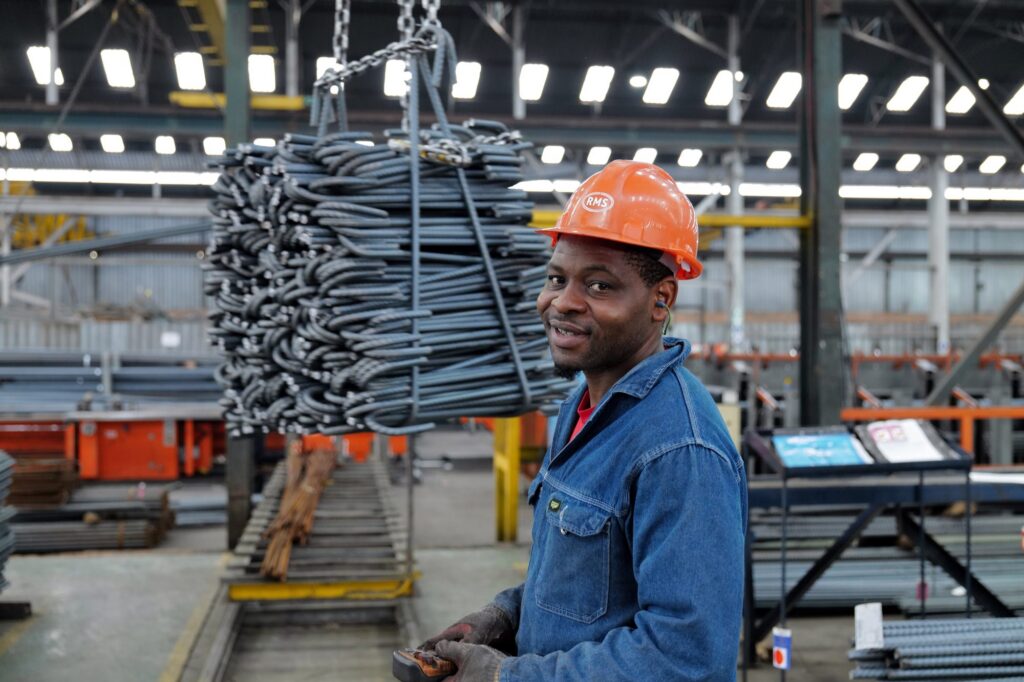
On a concrete project, the steel has to be the right shape, in the right place, at the right time. RMS can take care of all three: we cut and bend the reinforcement, deliver it in the order your crew needs it, and our own steel fixing teams place and tie it on site. When the site is large or remote, RMS can also set up a temporary production plant next to the works.
What an RMS steel fixing team does
A steel fixer positions and secures reinforcing steel to the engineer’s approved drawings and bar bending schedules before the concrete is poured. Getting the cover, the spacing and the laps right is what lets the structure perform as designed. RMS teams do exactly this, from residential foundations to large commercial and infrastructure projects, and they work with your site manager, engineer and contractor so that the fixing follows your drawings and your programme. Every RMS branch can arrange a steel fixing team.

Safety comes first on every site. RMS teams follow occupational health and safety standards, PPE requirements, hazard identification and the safety rules of your site, and they hold regular toolbox talks.
Why the steel and the fixing come from one company
Steel fixing is offered to clients who buy their reinforcing steel from RMS. That is deliberate. When the people who cut and bend the steel are in contact with the people who fix it, a question about a bar mark or a delivery sequence is answered in one phone call, not passed between a material supplier and a labour contractor. The fixing applies to reinforcing steel supplied by RMS. RMS supplies welded mesh but does not install it.

- Cut and bend. Bars are cut and bent to your bending schedules in a controlled facility.
- Delivery. Bundles are delivered in the sequence the fixing team needs them.
- Fixing. Experienced crews place and tie the steel to the approved drawings.
- Scale. Crews scale up quickly to match the size of the project, from a small residential site to a major infrastructure build.
When production moves to the site
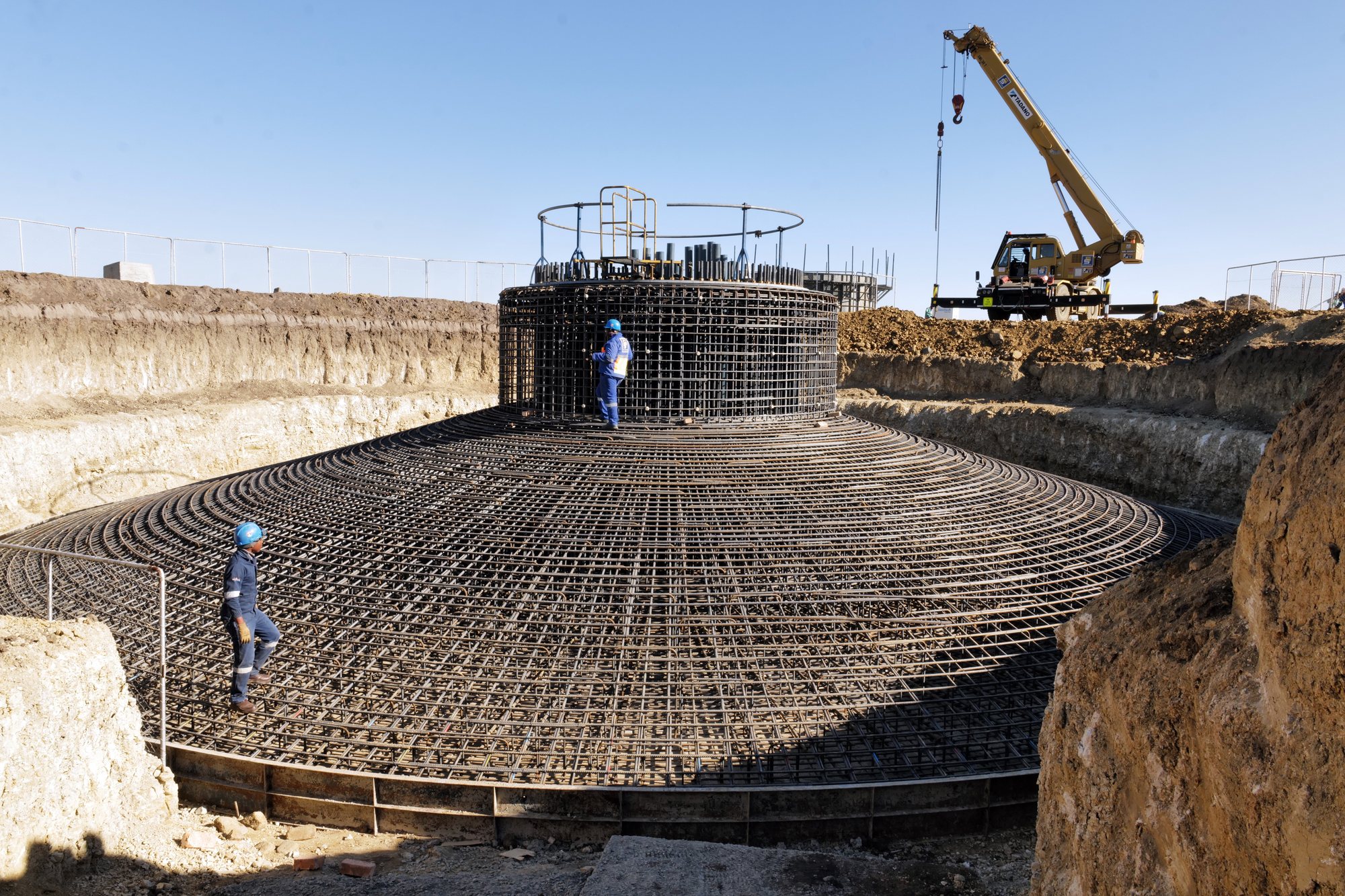
For high-volume, time-sensitive work, RMS can deploy a mobile rebar production facility at or near your project. This suits large infrastructure, wind and solar farms, and remote developments, where transport delays hurt the most. A plant with its equipment, staff and logistics can be up and running within six to eight weeks, and it can be kept for the whole project and scaled up or down as the volume changes.
The quality control is the same as at an RMS facility, and the work follows SANS standards. Producing on site also saves long-distance haulage and interim storage, which is why this option is worth planning early.
On-site production is available in any province and through any RMS branch. RMS assesses each project on its own requirements, so speak to your nearest branch early in your planning.
A worked example: The Granger Building, Cape Town
The Granger Building in Green Point was the biggest concrete pour WBHO Cape has ever done: 1,312 m³ in one 13-hour pour on Monday 14 September 2026. RMS Cape Town had to cut, bend, deliver and fix the full 249 tonnes of reinforcing steel inside an 11-day slab programme. The figures below come from WBHO and RMS Cape Town.
| What | The figure |
|---|---|
| Reinforcing steel fixed | 249 tonnes, made up of 24,451 individual bars |
| The slab | 2,160 m² (45 m x 48 m), 280 mm to 1,350 mm deep, with four to six layers of reinforcement |
| The programme | 11 days, against a usual slab cycle of 12 to 15 days |
| Fixing time | 9 days in total, through both weekends |
| The RMS team | 104 steel fixers, 32 foremen and 4 RMS managers, 140 people in all |
| The pour | 1,312 m³ of concrete, 217 truck deliveries, 07:00 to 20:00 |
| Where from | RMS Cape Town in Blackheath, about 36 km from site |
What the example shows is the way a team works: a project-specific crew, steel delivered in step with the fixing programme, and one company to speak to while the dates were tight. Read the full story in our October article, 249 Tonnes, One Pour: RMS Steel Fixing at The Granger, Cape Town.
What to send, and when
The earlier your branch sees your drawings and bending schedules, the more certain the delivery and the fixing programme become. Send these with your quote request:
- Drawings. The engineer’s drawings and the bar bending schedules.
- Programme. The site address, the start date and the date by which each section must be ready for concrete.
- Scope. Whether you need cut and bend only, cut and bend with a fixing team, or a production plant on site.
The branch confirms the price, the lead time and the team size, and tells you early if anything on the drawings is hard to build or hard to deliver.
Frequently asked questions
What does a steel fixing team actually do?
A steel fixer positions and secures reinforcing steel to the engineer’s approved drawings and bar bending schedules before the concrete is poured, getting the cover, spacing and laps right so the structure performs as designed.
Can RMS supply the reinforcing steel as well as fix it?
Yes. Steel fixing is offered to clients who buy their reinforcing steel from RMS, so supply, cut and bend, delivery and fixing all come from one source.
What is the difference between cut and bend and steel fixing?
Cut and bend prepares the reinforcement to the exact lengths and shapes on your bar schedule, in a controlled facility. Steel fixing installs and ties that reinforcement in position on site. RMS offers both, so the two stay coordinated.
How long does it take to set up on-site production?
RMS can establish a fully functional on-site plant, including equipment, staff and logistics, within six to eight weeks.
Which RMS branches can arrange on-site production?
Any of them. On-site production is available in any province and through any RMS branch, and RMS assesses each project on its own requirements. Contact your nearest branch to discuss yours.
Ready to plan your site?
Send your drawings and bending schedules to your nearest RMS branch, and the team will come back with a price, a lead time and a plan for the fixing. Request a fixing team, ask about on-site production or find your nearest branch.