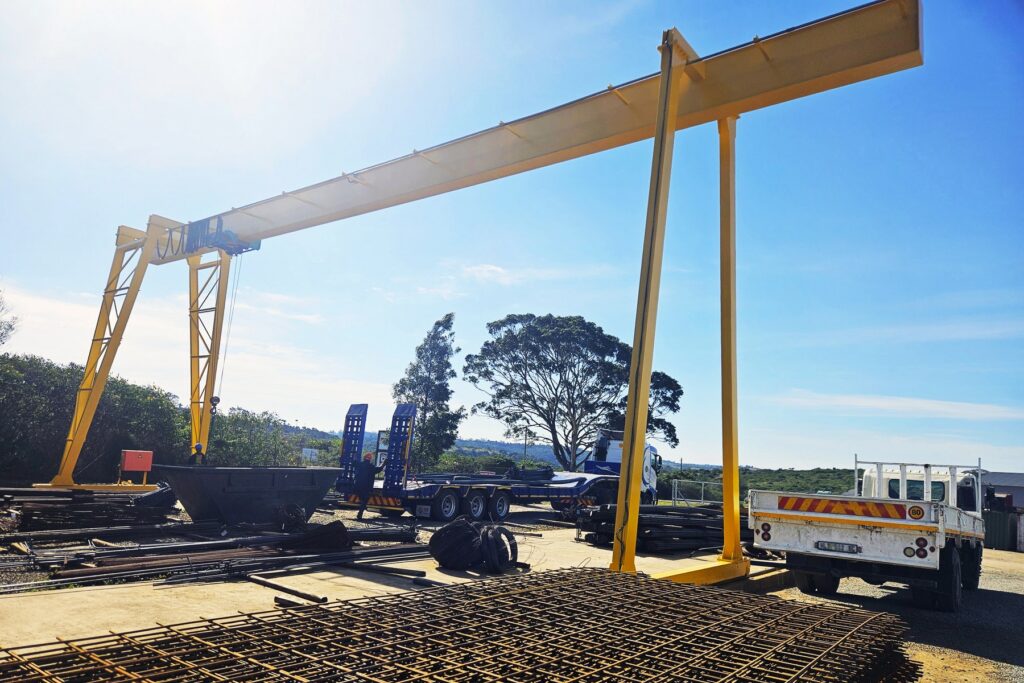
Cut and bend steel is reinforcing bar that arrives on site already cut to length and bent to the shapes on your bending schedule, so it can be placed without bending by hand on site. For a residential slab it saves time on site and helps reduce offcuts and waste. RMS supplies cut and bend steel from Johannesburg and Durban, and your branch confirms delivery to your site when it quotes.
Reinforcing steel for a residential slab
Concrete is strong in compression but weak in tension: it resists being squeezed far better than being pulled apart. Reinforcing steel carries the tension. How a slab is reinforced depends on its design, the ground conditions and the structural engineer’s specification. In many house slabs the engineer specifies welded mesh across the floor area, with reinforcing bar in the edge beams, the thickened strips under the walls. The drawings set the bar sizes, the spacing and the shapes. RMS does not design the reinforcement: we supply it to the engineer’s drawings.
This article deals with ground-bearing slabs, which rest on prepared ground. Suspended slabs, which span between supports, are designed and reinforced differently, so always work from the engineer’s drawings for your slab.
The bars come in two grades. High tensile steel (Y bars, 450 MPa) is deformed, with ribs that grip the concrete, and is the usual choice for structural work. Mild steel (R bars, 250 MPa) is smooth. Both are supplied to SANS 920:2011, in diameters up to 40 mm.
What cut and bend means
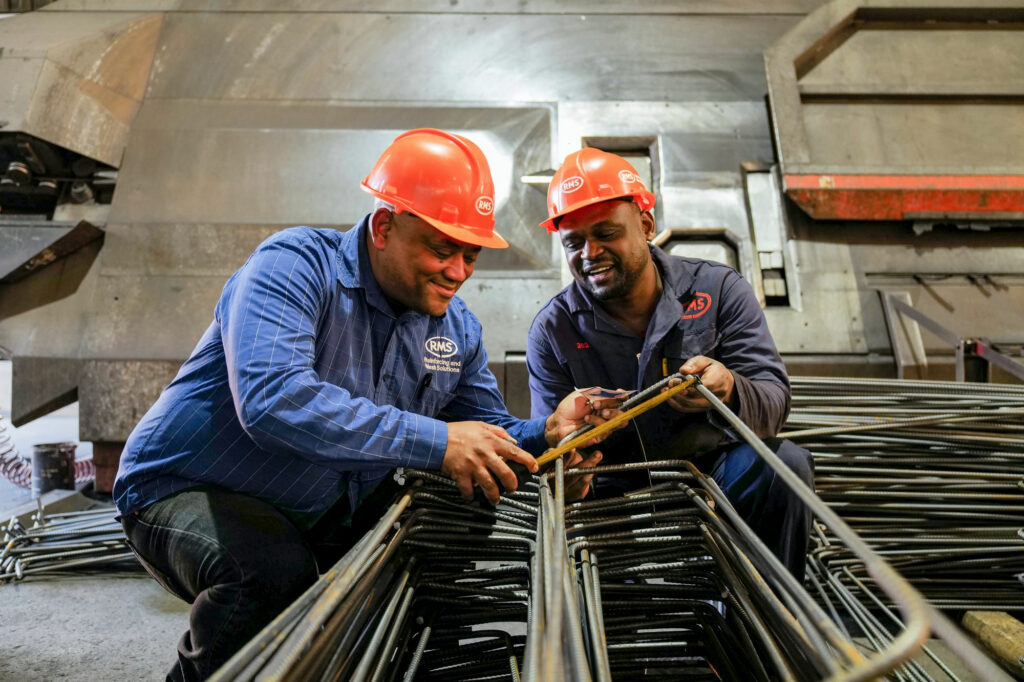
Every bar in a slab has a length, and many have a bend: an L at a corner, a U for a link, a hook at the end. Cut and bend moves that work from the building site to a controlled yard. The bars are cut and bent to the dimensions on your bending schedule, bundled and labelled by bar mark, and delivered ready to fix.
The bending schedule is the page that makes this work. For each bar mark it gives the bar size, the shape code, the number of bars and every dimension. A clear, complete schedule gives the best chance that the steel arrives as the drawings intend. An incomplete or unclear one has to be queried before cutting, which can delay the order, and an error costs more to correct on site than it does on paper.
Why builders order it for slabs
- Time on site. Bars arrive cut and bent, so the fixing team spends less time bending on site.
- Less waste. Bars are cut to length in the yard, which helps reduce offcuts on site.
- Clear marking. Each bundle is tied and labelled by bar mark, so the team knows where every bar goes.
- Traceability. Batch certificates for reinforcing steel can be supplied on request.
When stock lengths are the better choice
Cut and bend is not always the faster route. It needs an accurate bending schedule and processing time, so early planning matters. Stock lengths suit sites that prefer to fabricate themselves, need flexibility, or reinforce in phases. Many builders order both: cut and bend for the shapes, and stock lengths for straight bars and trimming.
How to order from RMS
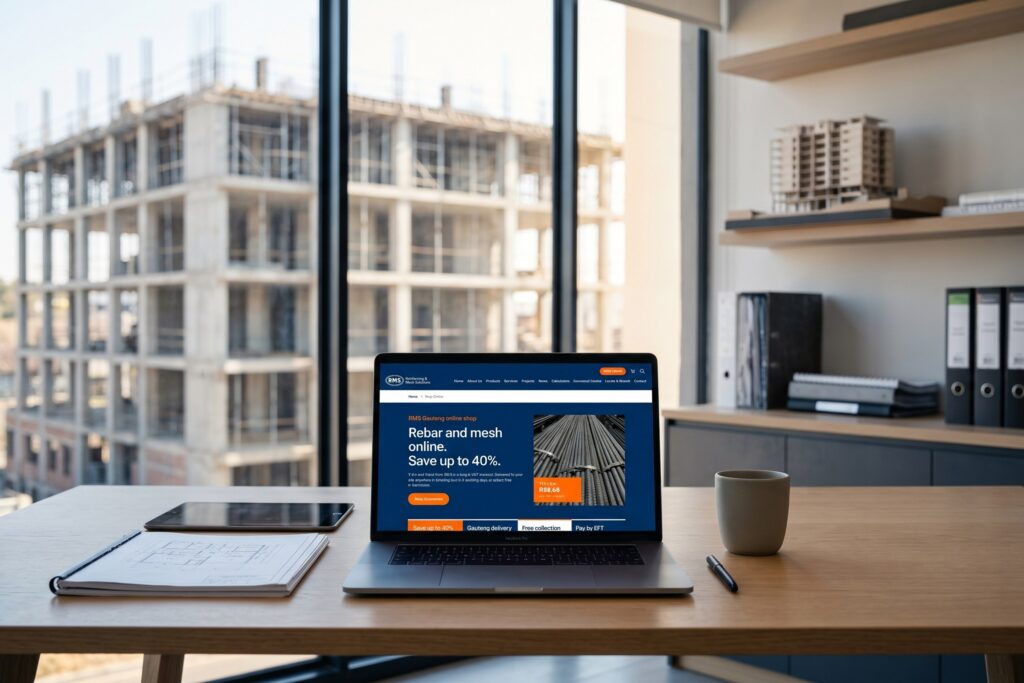
Use our rebar calculator to work out quantities and build a bending schedule, or send your engineer’s drawings and schedule as they are. Upload them with a quote request, and your nearest branch replies with a price and a delivery date. Johannesburg and Durban handle cut and bend orders: the Johannesburg branch at 30 N Reef Road, Henville, Germiston, and the Durban branch at Giba Gorge Business Park, Pinetown. Delivery arrangements and lead times depend on the branch, the product, stock, order size and fabrication, and your branch confirms both before you commit. The standard lead time is 3 to 7 working days from Johannesburg and 3 to 5 working days from Durban.
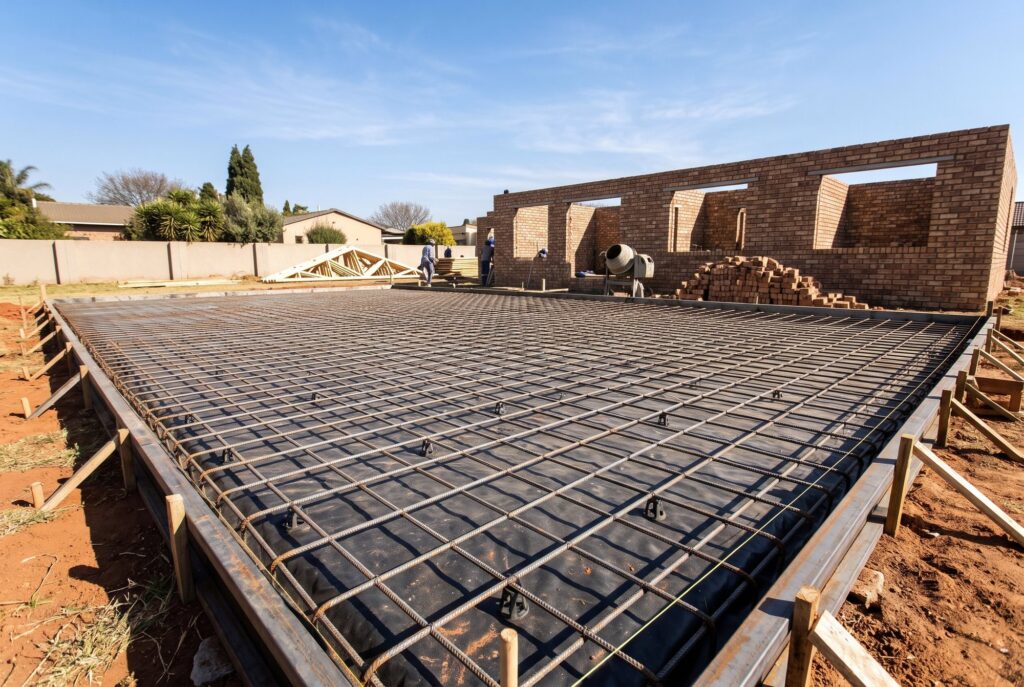
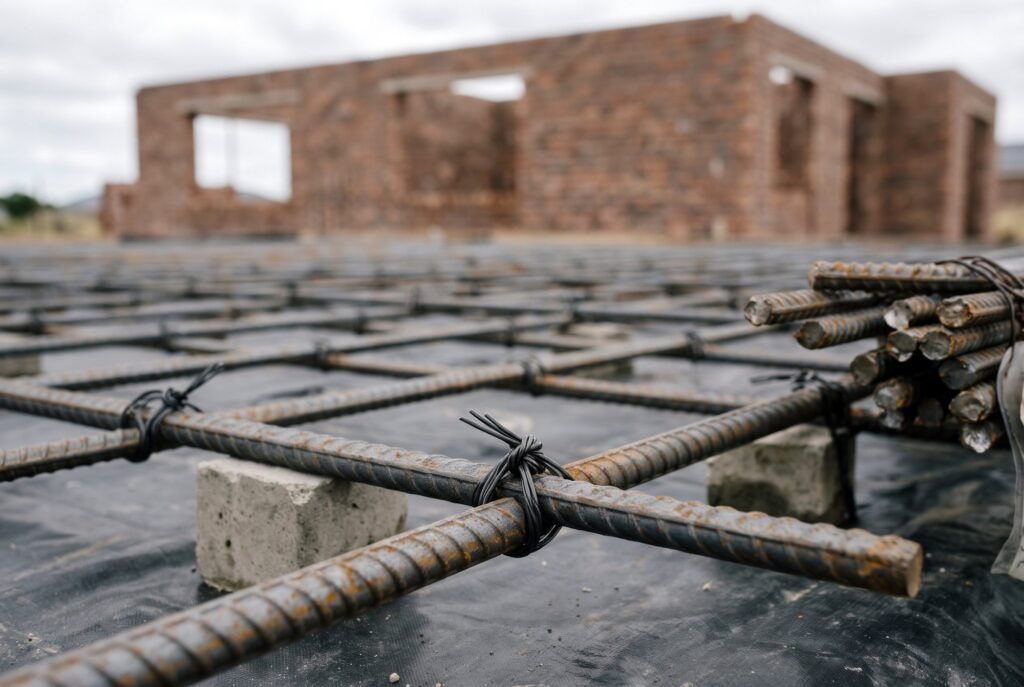
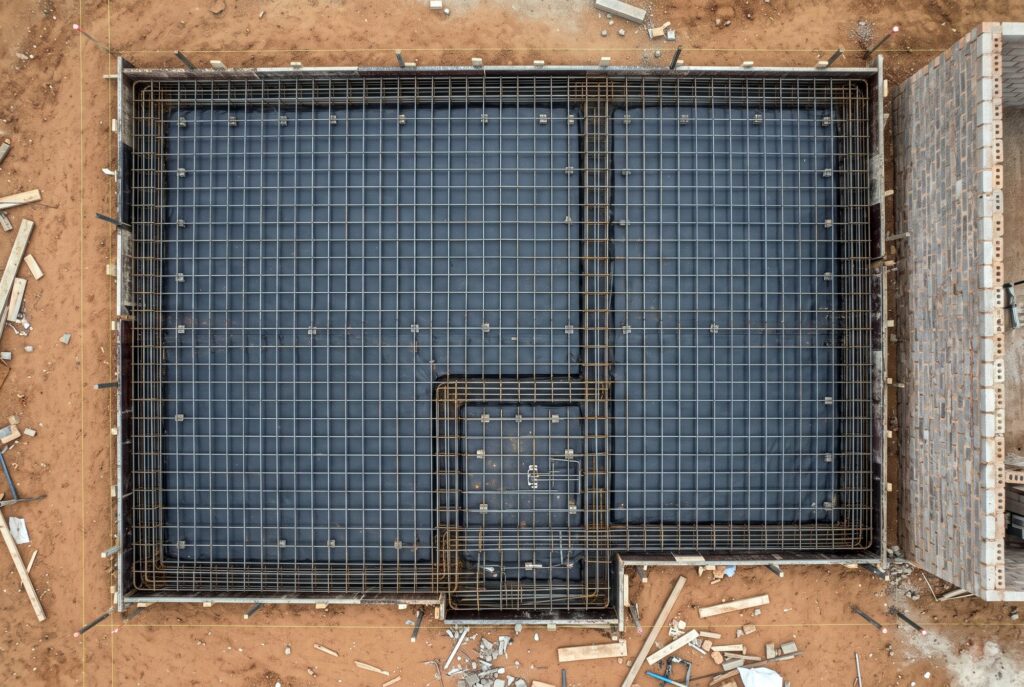
What a residential slab looks like when the steel is ready for the pour. These are illustrations, not photographs of an RMS project.
Frequently asked questions
What is a bending schedule?
It is a table, normally prepared by the engineer or detailer, that lists every bar in the job by bar mark: its size, shape code, quantity and dimensions. It is what the yard works from, so it needs to match the drawings.
How long does cut and bend take?
It depends on stock, order size and fabrication. The standard lead time is 3 to 7 working days from Johannesburg and 3 to 5 from Durban, and your branch confirms the date when it quotes. Plan early, because the steel must be processed before it can be delivered.
What should I send to get a quote?
Your bending schedule or the engineer’s drawings, with the site address and the date you need the steel. Upload them (JPG, PNG or PDF) with the quote request on the website, or take them to your nearest branch.
Should I order cut and bend or stock lengths?
Order cut and bend when you want bars ready to install and have an accurate schedule. Choose stock lengths when you want flexibility on site or you are reinforcing in phases. Our team will advise on a mix.
Ready to order?
Build your schedule in the rebar calculator, or send your drawings to RMS for a quote. Call, visit or request a quote online, and we will respond with a price and a delivery date.