The Free State region is home to significant infrastructure projects: dams, water distribution networks, major highways, and industrial facilities. These projects demand reinforcing steel solutions that are as engineered and reliable as the infrastructure they support.
One solution that has transformed reinforced concrete construction is the mechanical rebar coupler. For complex, high-load, or space-constrained projects, couplers replace traditional lap splices, delivering full-strength connections without waste, without overlap, and without the guesswork of manual tying.
This article explains what couplers are, when to use them, and how RMS supports engineers and contractors across Free State with supply and engineering coordination.
What Is a Mechanical Rebar Coupler?
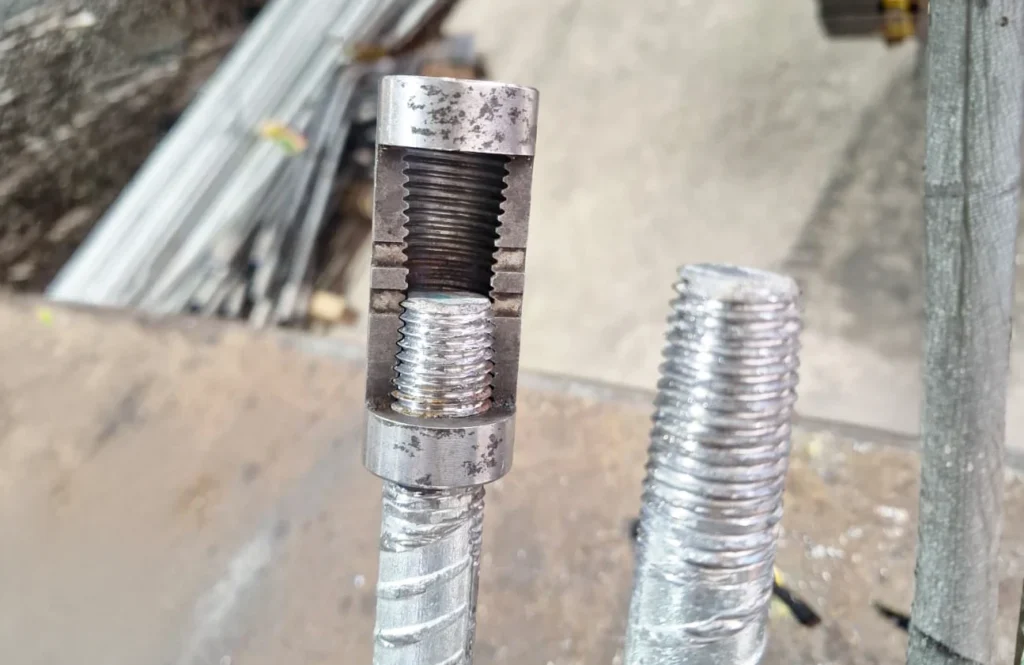
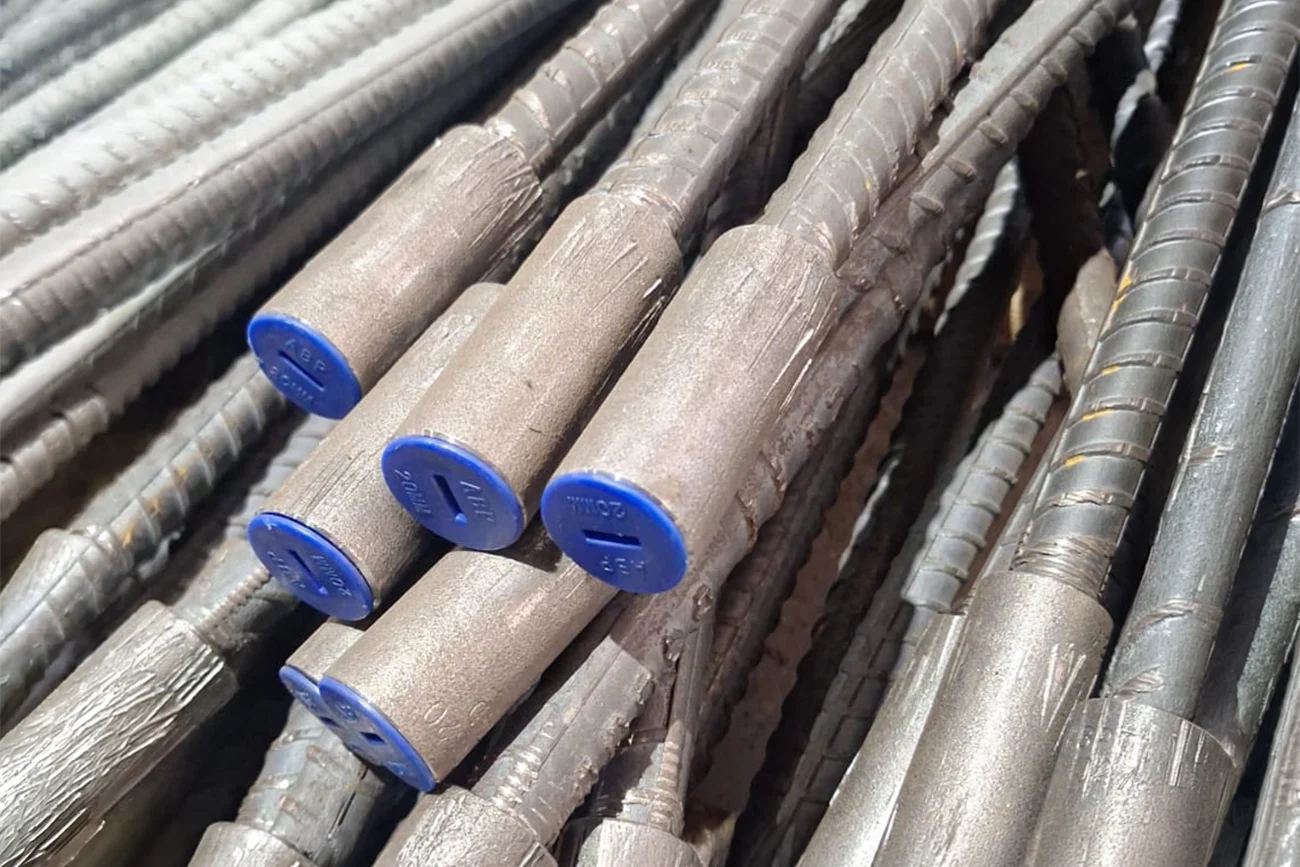
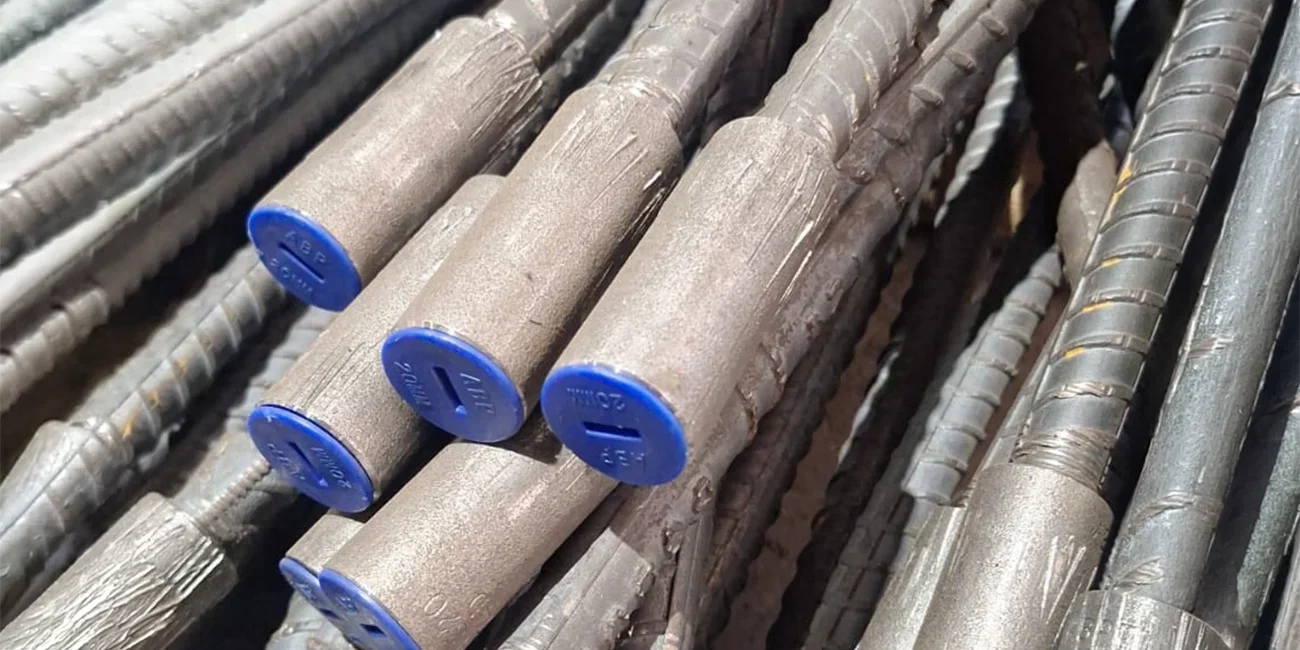
A rebar coupler is a sleeve that joins two lengths of rebar end-to-end, creating a full-strength splice. Mechanically, it transfers the tensile load of one bar directly to the next without overlap or overlap distance.
In traditional reinforced concrete design, two rebar lengths are overlapped and tied together (a lap splice). The overlap distance, typically 40 times the bar diameter for primary reinforcement, is necessary to allow the stress to transfer gradually from one bar to the other through friction and adhesion.
A coupler eliminates this overlap. The two bar ends are pushed into opposite ends of the coupler, and the coupler grips each bar, creating a rigid splice that develops the full strength of the bar under tension, compression, and cyclic loading.
Why use couplers?
- Space efficiency: In congested reinforcement (like multi-storey column splices), overlap distance is often physically impossible. Couplers solve this.
- Material savings: No overlap waste. If your design requires 50 m of rebar, you purchase exactly 50 m, not 50 m + overlap distance on every splice.
- Quality assurance: Each coupler is mechanically gripped and tested. There is no reliance on site craft or tie quality.
- Schedule efficiency: Couplers can be installed and tensioned quickly on-site, faster than tying overlaps.
- Retrofit and extension: Adding storeys or extending structures is possible without anchor dowels, simply splice the existing reinforcement with couplers.
Three Types of Mechanical Couplers: TTS, CXL, MBT
TTS Tapered Thread Couplers
Design: Bar ends are threaded with a tapered thread pattern. The coupler has matching internal threads. As each bar is screwed into the coupler, the tapered profile creates an interference fit.
Performance: Full-strength splice under tension, compression, and static loading. Proven over decades.
Best for: General-purpose reinforced concrete structures, residential and commercial buildings, where installation is straightforward and access allows threading.
Sizes: 12 mm to 32 mm bar diameter.
Installation: Requires bar-end preparation (threading), rigs for insertion, and a torque wrench for final tightening.
CXL Parallel Thread Couplers
Design: Bar ends are threaded with a parallel (uniform diameter) thread. The coupler has internal parallel threads. Threading load is lower than TTS, and connection stiffness is higher.
Performance: Excellent under high-load and cyclic (fatigue) conditions. Used in infrastructure and large-span structures where repeated loading matters.
Best for: Infrastructure (dams, bridge decks, long-span industrial buildings), heavy industrial, and fatigue-critical applications.
Sizes: 12 mm to 32 mm bar diameter.
Installation: Similar to TTS. Requires bar-end preparation and torque wrench for final verification.
MBT Shear Bolt Couplers
Design: No threading. Instead, the coupler has internal shear-bolt holes. The bar ends are inserted, and shear bolts are driven through the coupler into the bars, mechanically gripping the bars.
Performance: Full-strength splice. No bar-end preparation required (significant advantage on retrofit projects or where threading is impractical).
Best for: Retrofit projects, congested cages, extensions, or where bar-end access is limited.
Sizes: 12 mm to 32 mm bar diameter.
Installation: Faster than threaded couplers because bar ends do not require threading. Bolts are driven with a hydraulic tool.
Choosing the Right Coupler for Your Project
Use TTS if: You are building new, access allows threading, and you want the proven solution that has been used for 30+ years. It is the most economical for routine projects.
Use CXL if: Your project is infrastructure, involves large loads, spans, or cyclic loading (like bridge decks or dams). The extra cost is justified by superior performance and engineering confidence.
Use MBT if: You are retrofitting, extending existing structures, or space/access prevents bar threading. MBT is indispensable for these scenarios.
RMS’s Coupler Supply and Support in Free State
RMS Bloemfontein supplies Ancon mechanical couplers, one of the world’s most trusted coupler brands, across Free State.
We provide:
- Full range: TTS, CXL, MBT couplers in all sizes (12 mm to 32 mm).
- Engineering documentation: Material certificates, design documentation, installation guides.
- Quantity planning: Send drawings, and we calculate exact coupler requirements.
- Delivery: Same-day to next-day delivery to Bloemfontein and across Free State.
- Remote support: If your engineer has questions on coupler selection or installation, RMS Remote Support connects you with our engineering team.
A Typical Couplers Scenario
Consider a common infrastructure situation: a large civil project with heavily congested reinforcement, for example thick pile caps or deep sections where 32 mm bars must be joined. Traditional lap splices in this setting require long overlaps, add steel, and are physically awkward to place where bars are already tightly packed.
In a case like this, an engineer will often specify mechanical couplers for the primary splices instead. The typical benefits are:
- Less steel, because there is no overlap length to buy on every splice.
- Simpler placement, because bars are shorter and there are fewer overlaps to coordinate.
- A more reliable connection, because each splice is mechanically gripped rather than tied.
- A schedule that holds, because coupler installation is quick and repeatable at volume.
RMS supplies couplers to the specified system, with material certification and technical support, so the engineer’s design is delivered exactly as drawn.