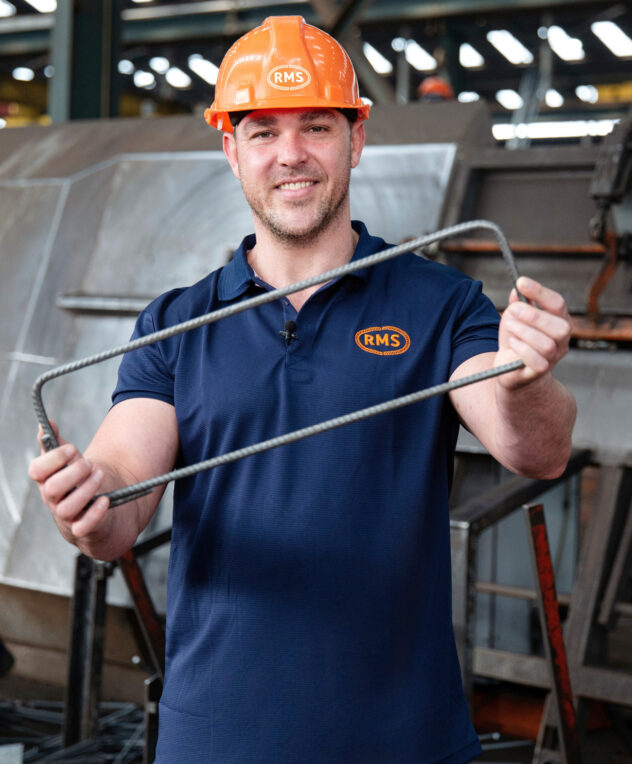
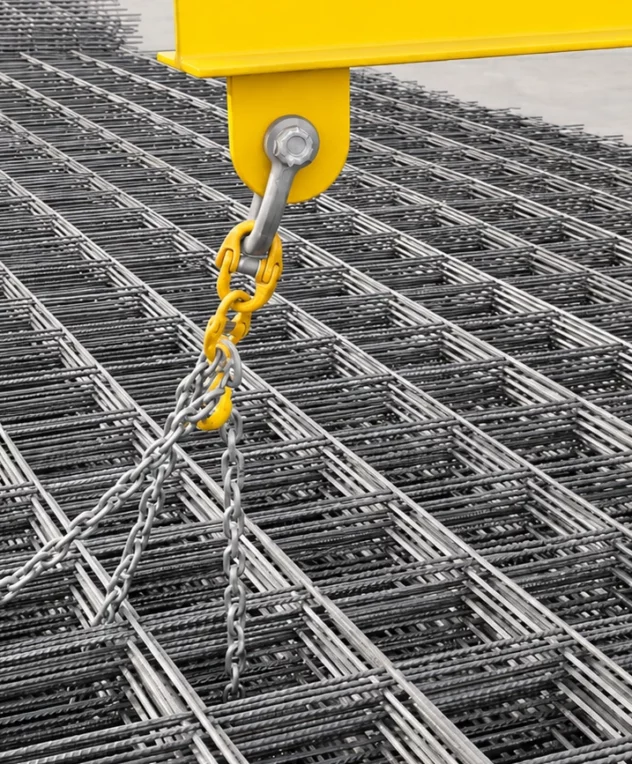
Walk onto almost any construction site and you will hear people talking about reinforcement schedules, bending details, bar marks, and shape codes.
For experienced engineers and steel fixers, these terms are part of everyday language. For many contractors, homeowners, and even junior site staff, however, reinforcement drawings can sometimes feel like a completely different language.
One of the most important concepts to understand is the reinforcing steel shape code, often referred to as a rebar shape code.
These standardised codes form the backbone of reinforcing steel fabrication, helping engineers, contractors, and fabricators communicate accurately and efficiently throughout a project.
Without shape codes, producing Cut & Bend reinforcement would be slower, more complicated, and far more prone to errors.
What Are Rebar Shape Codes?
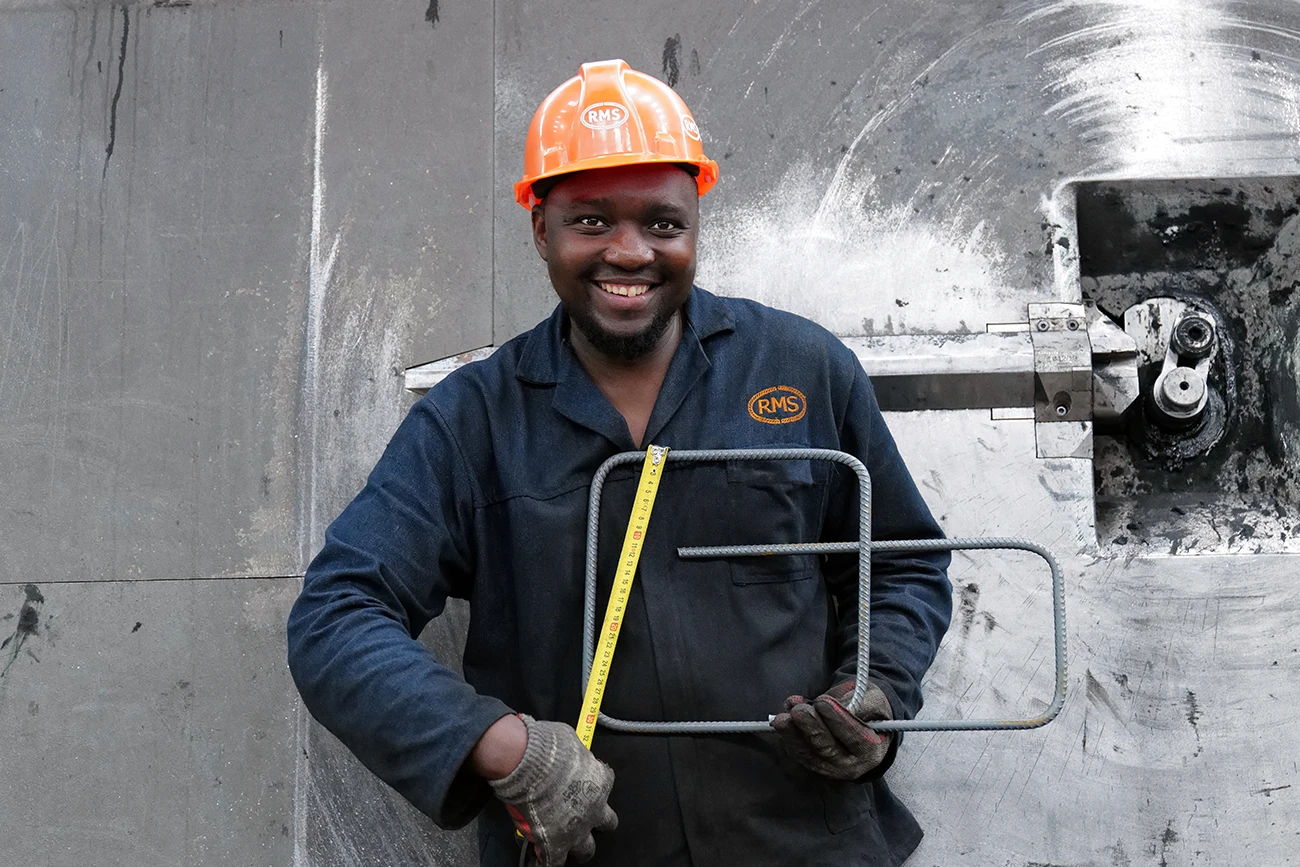
A rebar shape code is a standardised reference used to identify the shape and bending configuration of a reinforcing bar.
Rather than describing every bend individually, engineers use a numerical code that corresponds to a recognised reinforcement shape.
This allows everyone involved in the project to work from the same instructions.
Instead of saying:
“Take a 12 mm bar, bend it 90 degrees at one end, then bend it again 450 mm later…”
the engineer simply references the appropriate shape code and dimensions.
The fabricator immediately understands exactly what needs to be manufactured.
The result is faster communication, improved accuracy, and fewer mistakes.
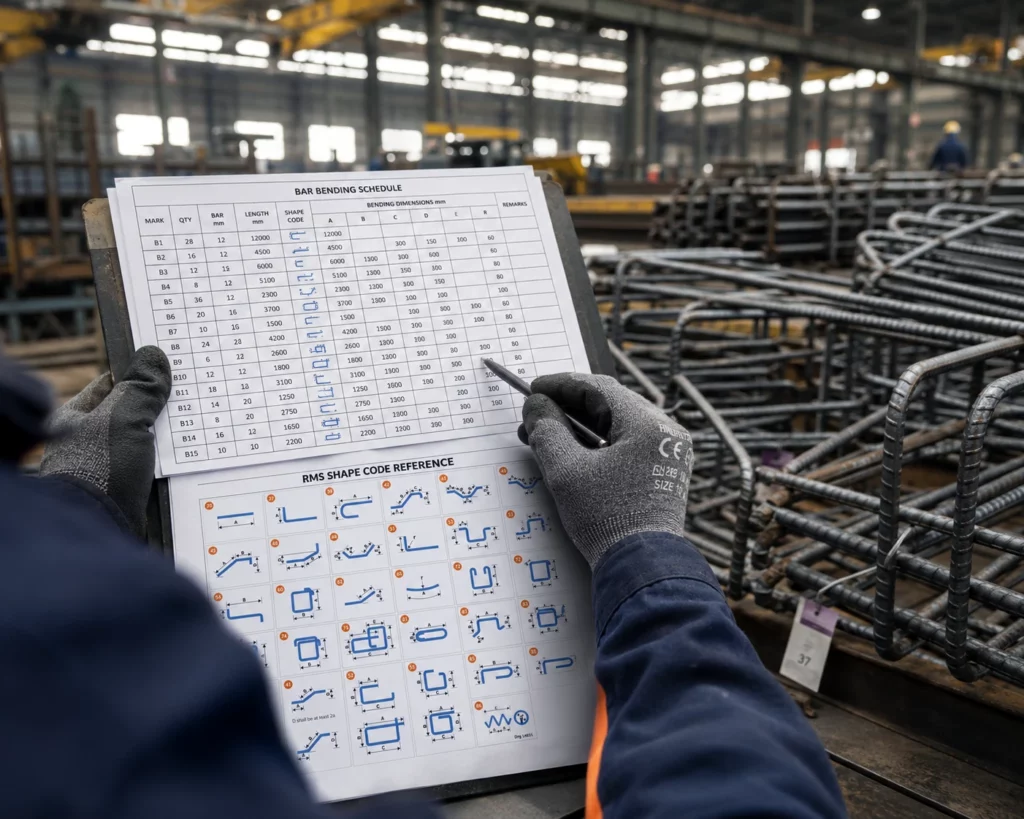
RMS Shape Code Reference Guide
RMS uses recognised South African shape code standards when fabricating Cut & Bend reinforcement. These standardised shapes simplify communication between engineers, contractors, and fabricators, helping ensure accuracy throughout the construction process.
Why Shape Codes Matter
Shape codes are not just a technical convenience.
They play a critical role in ensuring reinforcement is manufactured correctly and installed as intended.
A small error in reinforcement placement can affect structural performance, cause delays, and create unnecessary costs.
Shape codes help minimise these risks by creating a common language between:
- Structural engineers
- Detailers
- Quantity surveyors
- Contractors
- Fabricators
- Steel fixers
- Site supervisors
When everyone works from the same system, projects run more smoothly.
Where Are Shape Codes Used?
Shape codes appear on:
- Reinforcement drawings
- Bar bending schedules (BBS)
- Fabrication instructions
- Reinforcement take-offs
- Engineering specifications
If a project includes Cut & Bend reinforcement, shape codes are almost certainly being used somewhere in the process.
They are particularly important on projects involving large quantities of reinforcement, where hundreds or even thousands of bars must be manufactured accurately.
What Is a Bar Bending Schedule?
To understand shape codes properly, it helps to understand the role of a Bar Bending Schedule, often referred to as a BBS.
A Bar Bending Schedule is a detailed document that lists every reinforcement bar required for a project.
It typically includes:
- Bar marks
- Bar diameters
- Quantities
- Lengths
- Shape codes
- Bending dimensions
- Placement references
Think of it as the manufacturing blueprint for reinforcing steel.
Fabricators use the schedule to produce the reinforcement exactly as specified by the engineer.
Without a clear BBS, fabrication becomes significantly more difficult and mistakes become more likely.
Common Shape Codes Used in South African Construction
While dozens of reinforcement configurations exist, several shape codes appear regularly on residential, commercial, industrial, and infrastructure projects across South Africa.
Modern reinforcing steel fabrication relies on standardised shape codes that allow engineers, contractors, and fabricators to communicate clearly and accurately. RMS follows recognised South African shape code standards, ensuring consistency from design through to fabrication and installation.
Shape Code 20
Shape Code 20 is the simplest reinforcement shape and consists of a straight bar cut to a specified length.
It is commonly used in:
- Slabs
- Foundations
- Walls
- General reinforcement applications
Although straightforward, accuracy remains critical, particularly on projects requiring large quantities of reinforcement.
Shape Code 37
Shape Code 37 is one of the most commonly specified bent bars and features a standard 90-degree bend.
This shape is frequently used where reinforcement must anchor into another structural element, including:
- Footings
- Ground beams
- Retaining walls
- Structural corners
The bend helps transfer loads effectively through the reinforced concrete structure.
Shape Code 51
Shape Code 51 is another widely used reinforcement configuration and is commonly found in foundations, beams, columns, and retaining structures.
These bars provide anchorage and reinforcement continuity in areas where structural loads must be distributed efficiently.
Shape Codes 60, 73 and 74
These closed or partially closed reinforcement shapes are often used to form links, ties, and confinement reinforcement within structural elements.
They are commonly specified for:
- Columns
- Beams
- Pile cages
- Structural reinforcement cages
On larger projects, hundreds or even thousands of these shapes may be required, making fabrication accuracy particularly important.
Shape Code 81
Shape Code 81 forms a closed loop and is used in specialised reinforcement applications where anchorage and load transfer are critical.
This shape is often specified by engineers for applications requiring enhanced structural performance and reinforcement continuity.
Understanding the Bigger Picture
The examples above represent only a portion of the shape codes used throughout the South African construction industry.
RMS fabricates reinforcing steel according to approved drawings, Bar Bending Schedules (BBS), and recognised shape code standards. This ensures every bar is manufactured consistently, accurately, and in accordance with project requirements.
Why Standardised Shape Codes Matter
South African shape codes are aligned with recognised industry standards, creating a common language that can be understood by engineers, contractors, fabricators, and construction teams across the country.
This standardisation delivers several important benefits:
- Improved fabrication accuracy
- Reduced interpretation errors
- Greater consistency across projects
- Faster communication between project stakeholders
- Simplified Bar Bending Schedules
- Improved construction efficiency
Recent updates to South African shape code standards have brought the system into closer alignment with British standards, helping improve consistency across the industry.
At RMS, all Cut & Bend reinforcing steel is fabricated according to approved schedules and recognised shape code standards, giving contractors confidence that the reinforcement delivered to site matches the engineer’s design requirements.
The Link Between Shape Codes and Cut & Bend Steel
Shape codes become especially important when using Cut & Bend steel.
When a contractor orders Cut & Bend reinforcement, the fabricator receives the project schedules and uses the specified shape codes to manufacture each bar.
Every bend, dimension, and angle is produced according to the approved design.
The contractor then receives reinforcement that is ready for installation.
This offers several advantages:
Reduced Site Labour
Because the reinforcement arrives ready to install, site teams spend less time cutting and bending steel manually.
Faster Construction
Installation can begin immediately, helping contractors maintain project schedules.
Greater Consistency
Machine-controlled fabrication delivers a level of consistency that is difficult to achieve through manual site fabrication.
Less Waste
Efficient fabrication planning helps reduce unnecessary material wastage.
A Common Misunderstanding
Many people assume shape codes are only relevant to engineers.
In practice, contractors and builders benefit from understanding them as well.
A basic understanding of shape codes can help project teams:
- Interpret reinforcement schedules more confidently
- Communicate more effectively with suppliers
- Identify potential issues earlier
- Verify delivered reinforcement more easily
You do not need to be a structural engineer to appreciate how reinforcement is being fabricated for your project.
How RMS Supports Contractors and Builders
At RMS, shape codes form part of the daily fabrication process.
Our Cut & Bend teams work directly from approved schedules and engineering requirements to manufacture reinforcement accurately and efficiently.
Whether the project involves:
- Residential housing
- Commercial developments
- Industrial facilities
- Municipal infrastructure
- Large-scale civil works
our fabrication processes are designed to ensure reinforcement arrives ready for installation.
This reduces site delays, improves productivity, and helps contractors maintain quality standards throughout construction.
Can RMS Help with Reinforcement Planning?
Absolutely.
In addition to supplying reinforcing steel products, RMS provides support and guidance to contractors, builders, engineers, and homeowners.
Our team can assist with:
- Product recommendations
- Cut & Bend solutions
- Reinforcement planning
- Material estimation
- Technical guidance
We also offer a range of free online calculators to help simplify planning and material estimation.
The Bottom Line
Shape codes may appear technical at first glance, but their purpose is actually very simple.
They provide a standardised language that allows engineers, contractors, and fabricators to communicate accurately.
That consistency helps ensure reinforcement is manufactured correctly, installed efficiently, and performs as intended once the structure is complete.
For projects using Cut & Bend steel, shape codes are one of the key reasons why modern reinforcement fabrication is faster, more accurate, and more reliable than traditional on-site methods.
Whether you are managing a major infrastructure project or building a family home, understanding the basics of shape codes can help you make more informed decisions about your reinforcement requirements.
Need Help with Cut & Bend Reinforcement?
Speak to the RMS team for assistance with reinforcing steel products, fabrication services, technical guidance, and project support.